When you picture a new roof, you probably picture shingles or metal panels. But the part you see is only one layer. Underneath it are several more, and they do just as much to keep water out of your home.
Here’s every layer that goes into a new roof, in the order it’s installed, explained in plain English.
The Short Answer
A complete roof is built in seven layers, from the bottom up:
- Decking: the wood base
- Drip edge: metal along the edges
- Ice and water shield: waterproof membrane in leak-prone spots
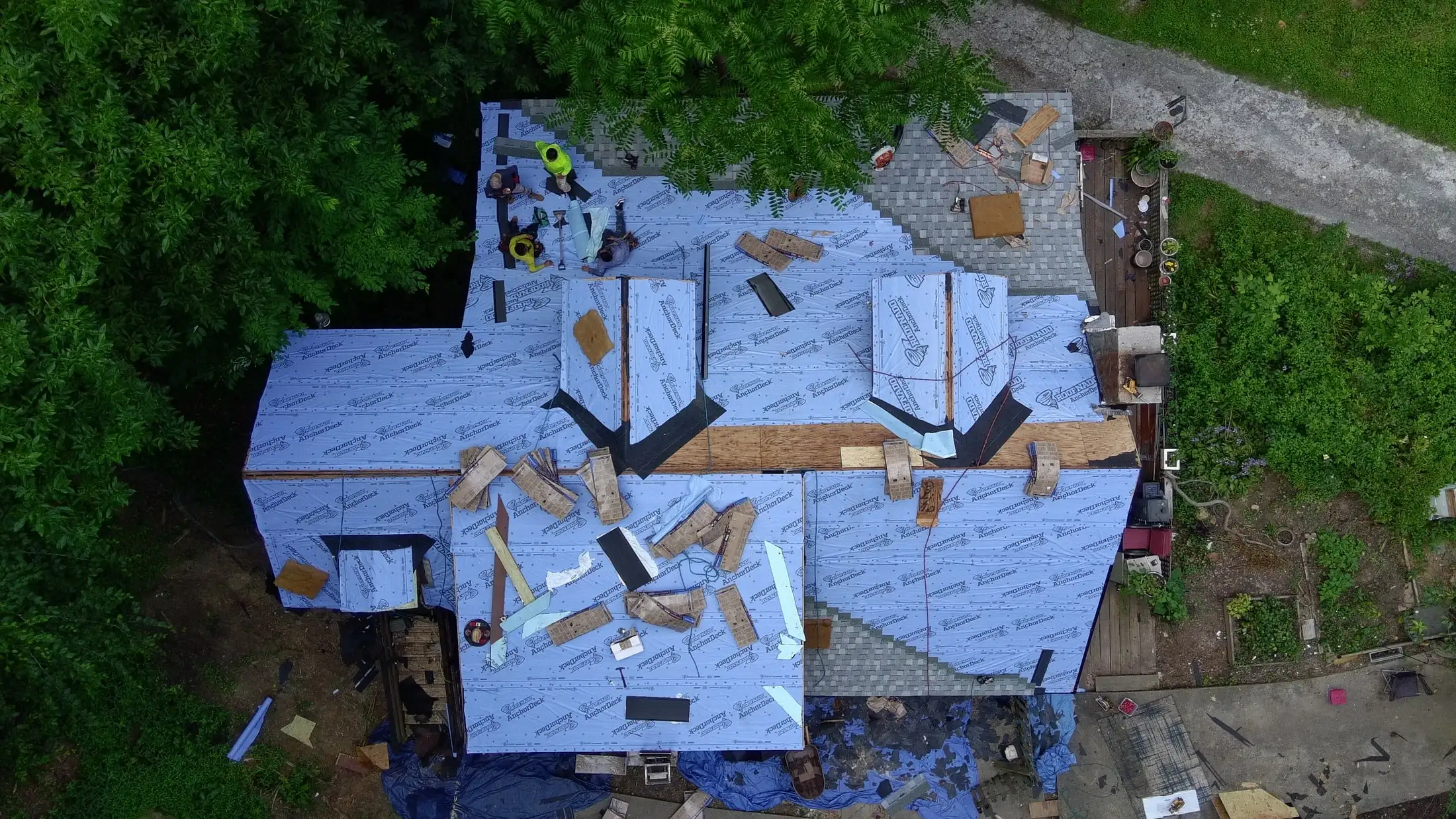
- Synthetic underlayment: a protective layer over the rest of the deck
- Flashing: metal that seals the seams
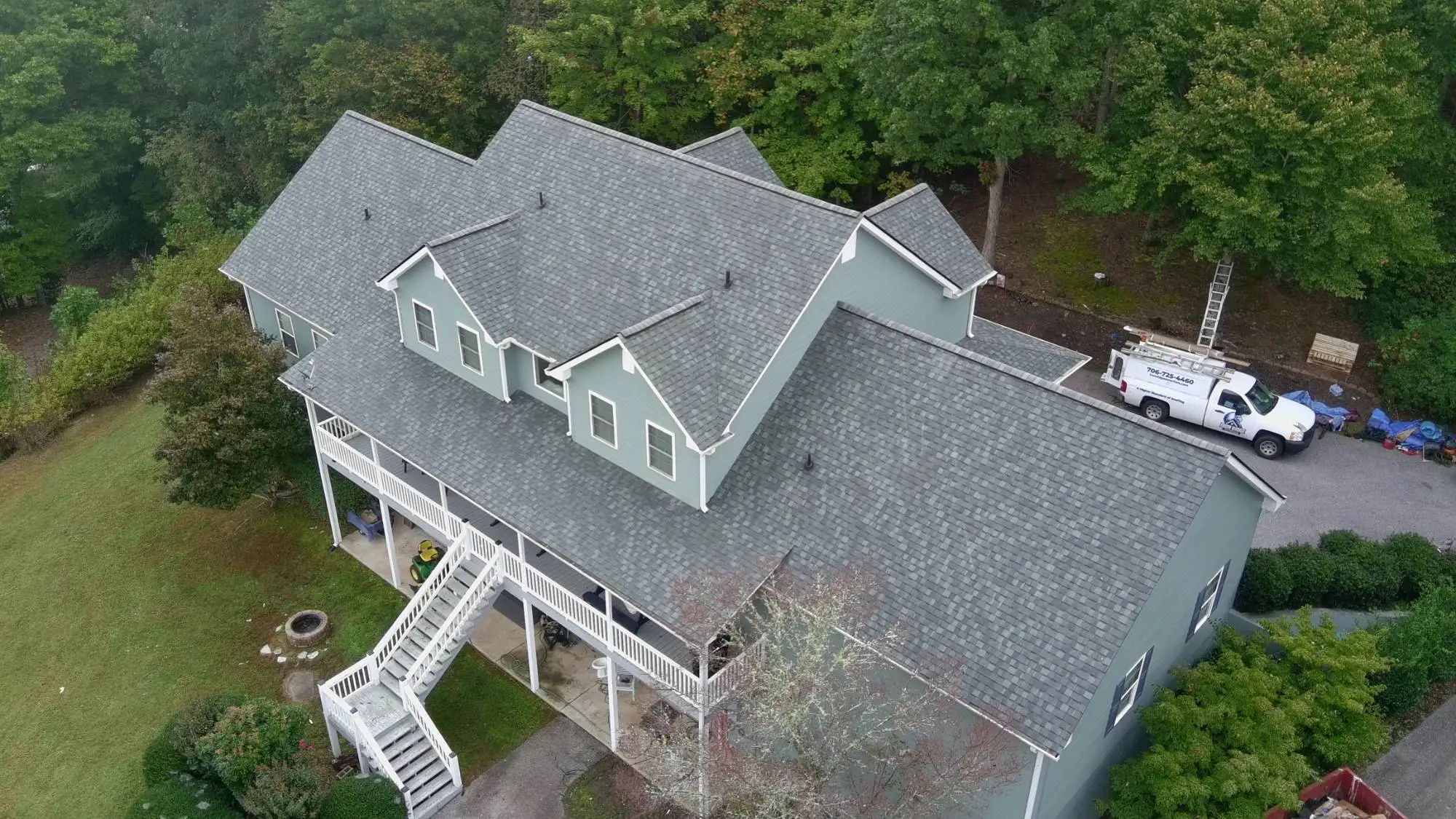
- Your new roof: shingles or metal
- Ridge caps and ventilation: the finishing pieces at the peak
The layers you never see are what decide whether a roof stays dry for decades or starts leaking in a few years.
Every Layer, Step by Step
1. Decking
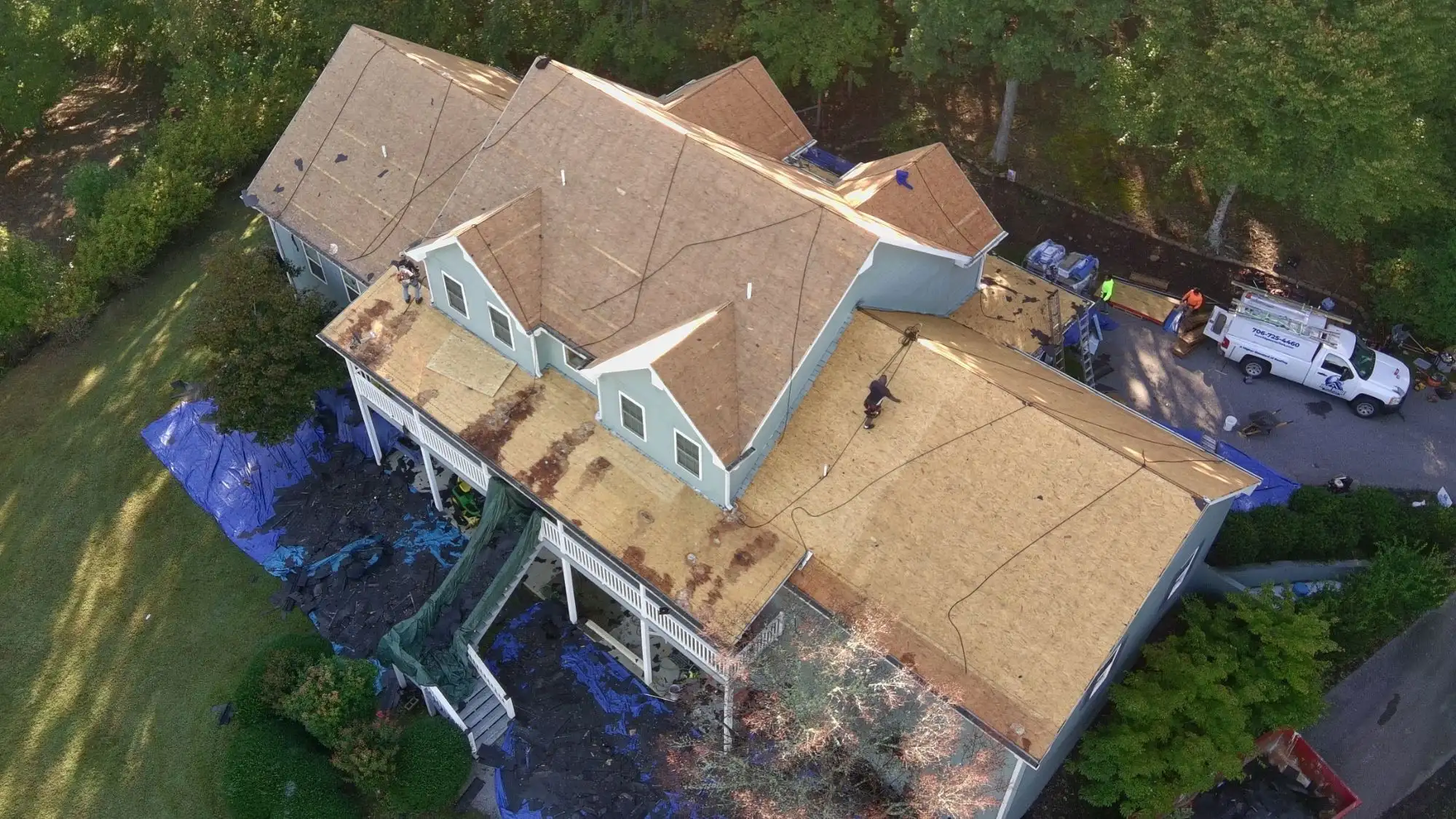
The decking is the wood base the whole roof sits on: the sheets nailed to your rafters. On a replacement, it’s exposed once the old roof is torn off.
This is the one part of the job no one can fully check ahead of time. Leaks, moisture, and age can rot or soften the wood under old shingles without showing on the surface. Once the old roof is off, any damaged sheets are replaced so your new roof has a solid base. At Iron Ridge, you get a set price per sheet up front, so if any decking needs replacing, you already know what it costs.
2. Drip edge
Drip edge is a strip of bent metal along the edges of the roof. It guides water off the roof and into your gutters instead of letting it run back under the shingles and soak the wood behind your gutters.
3. Ice and water shield
Ice and water shield is a sticky, rubbery, waterproof membrane that bonds right to the decking. It seals itself around nails, which makes it the best protection for the spots where water collects or gets funneled.
In colder states, roofers also run it along the roof edges to stop ice dams. In Georgia, ice dams aren’t a real concern, so it goes where it does the most good here: in the valleys and around chimneys, pipes, and vents.
4. Synthetic underlayment
Synthetic underlayment covers the rest of the decking. It’s a backup layer: if wind-driven rain ever gets under a shingle, the underlayment helps keep it out of the wood.
Older roofs used asphalt-soaked felt paper. Synthetic underlayment is the modern choice because it’s lighter, stronger, and much harder to tear, and it holds up better if it’s exposed to weather during the install.
5. Flashing
Flashing is bent metal that seals the seams where your roof meets something else, like a chimney or a wall. Those seams are where most roof leaks start, so they need careful work. A roof can have brand-new shingles and still leak if the flashing isn’t done right.
6. Your new roof
This is the part everyone sees: the shingles or metal panels you chose. Architectural shingles are the most popular choice in Northeast Georgia, and metal is a long-lasting option many homeowners love. Compare your roof options →
7. Ridge caps and ventilation
Ridge caps are special pieces that cover and seal the peak, where two sides of your roof meet. Ventilation lets hot, damp air escape your attic. Without it, heat and moisture build up under the roof in a Georgia summer, which is hard on the decking and on the roof itself. Good ventilation helps your new roof last longer.
Why the Hidden Layers Matter
Most roof leaks don’t start in the middle of a shingle. They start at the seams and edges: valleys, chimneys, pipes, vents, and walls. That’s exactly where drip edge, ice and water shield, and flashing do their job.
It’s also why two roofs that look the same from the street can perform very differently. The difference is usually in the layers you can’t see once the job is done.
What to Ask When Comparing Quotes
When you’re comparing roofers, ask each one to walk you through the layers:
- How do you handle damaged decking, and what does it cost?
- Is new drip edge included?
- Where does ice and water shield go on my roof?
- What kind of underlayment do you use?
- How do you handle flashing around my chimney, walls, and pipes?
- How will my attic be ventilated?
A roofer who can answer every one of these clearly, without pressure, is a roofer who pays attention to the parts that matter. Want a ballpark before you start? Try our Roof Price Estimator.
Frequently Asked Questions
Will my roof decking need to be replaced?
Usually only some of it, if any. Damaged decking can’t always be seen until the old roof comes off. At Iron Ridge, you get a set price per sheet up front, so if any sheets need replacing, you already know the cost.
What’s the difference between underlayment and ice and water shield?
Ice and water shield is a sticky, waterproof membrane used in the most leak-prone spots, like valleys and around chimneys, pipes, and vents. Synthetic underlayment covers the rest of the roof deck as a backup layer under your shingles or metal.
Why don’t Georgia roofs need ice and water shield along the edges?
In cold climates it’s used along the edges to stop ice dams, which form when snow melts and refreezes. Ice dams aren’t a real concern in Georgia, so it goes in valleys and around chimneys, pipes, and vents instead.
Is synthetic underlayment better than felt paper?
For most roofs, yes. Synthetic underlayment is lighter, stronger, and much harder to tear than old-style felt paper, and it holds up better if it’s exposed to weather during the install.