
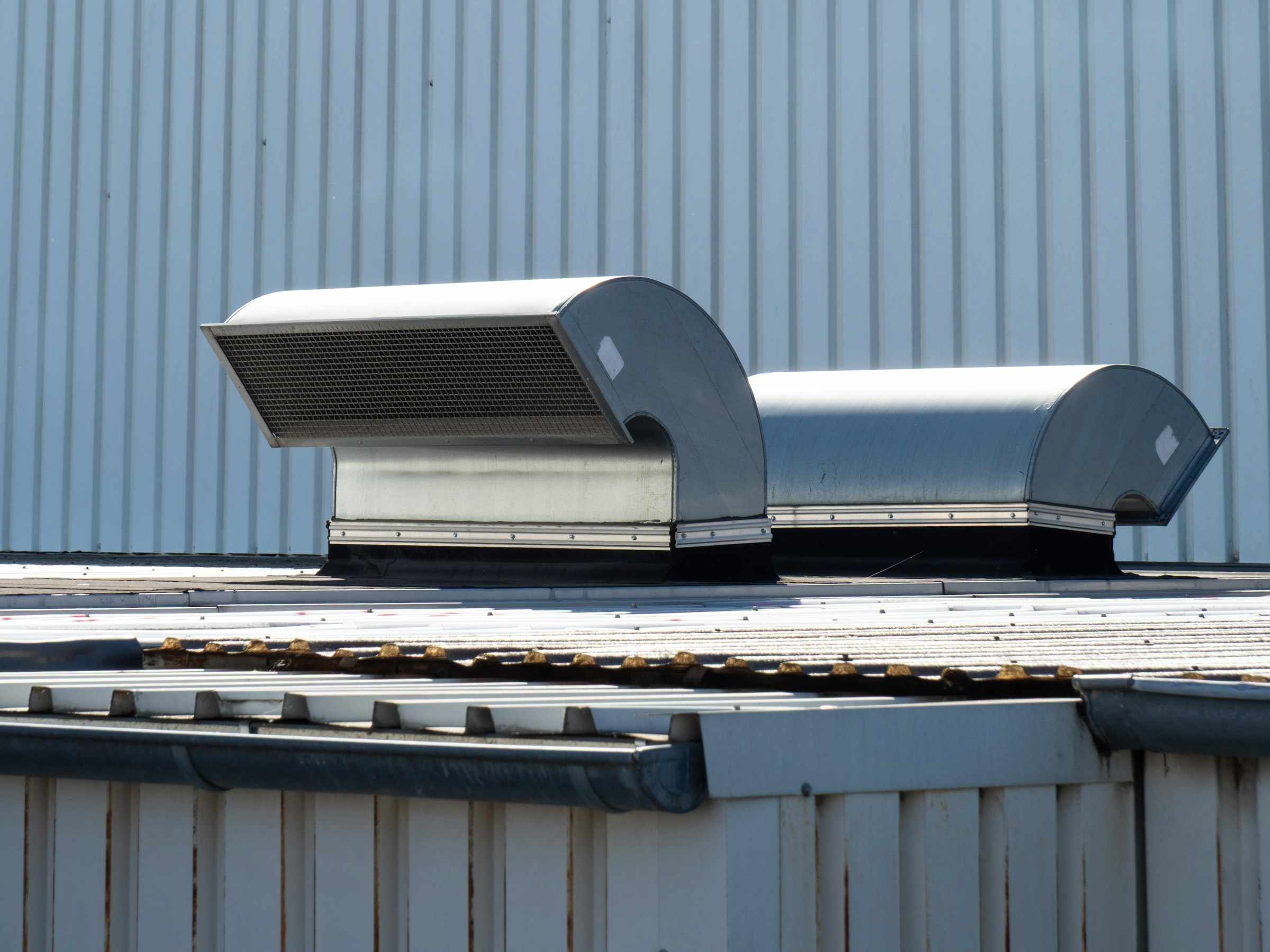
Commercial roof replacement
Commercial Roof Replacement
New TPO, EPDM, commercial metal, and modified bitumen roofs for businesses across Northeast Georgia, planned around your hours and installed in sections so your building stays protected.
Warning signs
Signs Your Commercial Roof Needs Replacing
- Leaks in more than one spot, or leaks that keep coming back after repairs
- Wet or soft spots underfoot, a sign of wet insulation under the membrane
- Seams splitting or pulling apart across the roof
- Blistering, cracking, or bare spots in the membrane
- Standing water that stays for days after it rains
- Rusted-through or loose panels on a metal roof
- Patches on top of patches, with repair costs adding up every year
Seeing one or two of these doesn’t always mean a new roof. If the base is solid, a roof coating may be the better value.
Request a Roof Inspection
Roof systems
TPO, EPDM, Metal, or Modified Bitumen?
Each commercial roof system has its strengths. Here’s how they compare, in plain English.
TPO Roofing
Thermoplastic polyolefin
TPO is one of the most widely installed commercial roofs today. The membrane comes in large rolls, and the seams are welded together with hot air, so they fuse into one continuous sheet. Its white surface reflects sunlight, which helps keep the building underneath cooler in a Georgia summer.
Best for: Flat and low-slope roofs where reflectivity and clean, welded seams matter: offices, retail, warehouses, and medical buildings.
EPDM Roofing
Rubber membrane
EPDM is a synthetic rubber membrane that has been used on commercial roofs for decades. It stays flexible through temperature swings and installs in large sheets, which means fewer seams. The seams that do exist are joined with adhesives and seam tape.
Best for: Low-slope roofs where a proven, cost-conscious system makes sense, including additions, churches, and older commercial buildings.
Commercial Metal Roofing
Standing seam & exposed fastener
Metal is a strong choice for commercial buildings with enough slope to shed water: shops, warehouses, churches, agricultural buildings, and metal buildings. Standing seam panels hide their fasteners under raised seams. Exposed-fastener panels are the more budget-friendly metal option.
Best for: Sloped commercial roofs and metal buildings where long life and low upkeep are the priority.
Modified Bitumen Roofing
Asphalt-based membrane
Modified bitumen is an asphalt-based roofing membrane reinforced with polymers, installed in layers. The finished roof is thick and tough, which makes it a good fit for flat roofs that see regular foot traffic from HVAC service and maintenance.
Best for: Flat roofs with frequent foot traffic or lots of rooftop equipment, like restaurants and retail with HVAC units.
| Feature | TPO | EPDM | Commercial Metal | Modified Bitumen |
|---|---|---|---|---|
| Best for | Flat & low-slope roofs | Flat & low-slope roofs | Sloped roofs & metal buildings | Flat roofs with foot traffic |
| Surface | White, reflective | Black rubber (usually) | Painted metal panels | Granulated or smooth asphalt |
| Seams | Heat-welded | Adhesive & seam tape | Standing seams or lapped panels | Torched or adhered laps |
| Stands out for | Reflectivity & welded seams | Flexibility & proven track record | Long life & low upkeep | Toughness under foot traffic |
| Budget | Mid-range | Budget-friendly | Higher upfront | Mid-range |
General comparison. The right system for your building depends on its slope, drainage, rooftop equipment, and how the roof is used.
How it works
Our Commercial Roof Replacement Process
Clear steps, clear communication, and no surprises for you, your tenants, or your customers.
- 01
Inspect & Measure
We walk the roof, check the membrane or panels, seams, flashing, drains, and penetrations, look for wet insulation, and measure everything.
- 02
Recommendation & Pricing
You get photos, our honest recommendation on the right system, and clear, upfront pricing before anything is scheduled.
- 03
Schedule Around Your Business
We plan the job with you: timing, access, parking, and how to keep your doors open and your tenants or customers comfortable.
- 04
Tear-Off & Install
The old roof comes off in sections, so the building is never left open to the weather, and the new system goes on with flashing and edge details done right.
- 05
Final Walkthrough
We walk the finished roof, clean up the site, and send you photos of the completed work.
After the install
Protect Your New Roof
A new commercial roof still needs looking after. Clogged drains, debris, and small punctures from HVAC service are the kinds of things that shorten a roof’s life when nobody’s checking.
Our maintenance plans include spring and fall inspections with a photo report after each visit, plus minor repairs and cleaning, so your new roof stays in good shape.
FAQ
Commercial Roof Replacement Questions
How do I know if my commercial roof needs to be replaced?
Repeated leaks, wet insulation, splitting seams, widespread blistering or cracking, standing water that doesn’t drain, and rusted-through metal panels are all common signs. If the roof underneath is still solid, a coating or repair may be enough, so the best first step is an inspection.
Which commercial roof system is best?
There isn’t one best system for every building. TPO is a popular reflective choice for flat roofs, EPDM is a proven budget-friendly option, modified bitumen handles foot traffic well, and metal is a long-lasting choice for sloped roofs. We’ll recommend the one that fits your roof’s slope, drainage, use, and budget.
Can my business stay open during a commercial roof replacement?
In most cases, yes. We plan the work around your hours and access, and tear off and replace the roof in sections so the building is never left open to the weather.
How long does a commercial roof replacement take?
It depends on the size of the roof, the system, and the weather. After we measure and inspect, we’ll give you a timeline along with your pricing.
Can you install a new roof over my existing commercial roof?
Sometimes, but only if the existing roof is dry, there’s only one roof already on the building, and code allows it. If the insulation under the old roof is wet, it needs to come off. We’ll check before recommending either option.
Is replacing my roof my only option?
Not always. If the roof is worn but the base is solid and dry, a silicone or acrylic coating or a metal roof restoration may extend its life for less. We’ll tell you honestly which makes sense.
Commercial roofing
Get a Price on a New Commercial Roof
Tell us about your building and what you’re seeing. We’ll inspect and measure the roof, show you photos, and give you clear, upfront pricing on the system that fits.
- Photos of everything we find
- An honest recommendation: maintain, coat, or replace
- Clear, upfront pricing
- Fully insured
Request a Free Commercial Roof Inspection
Use the notes box for your business name, building type, and roof type if you know it.